

What water extraction means for a Marshfield home
Water extraction is the removal of standing and absorbed water from a building with pumps, wet vacuums and truck-mounted or portable extraction units before drying begins. In Marshfield it usually follows a burst supply line, a failed sump pump, a washing machine hose or a coastal flood that pushes water across a floor.
Speed matters because water does not stay on the surface. Within hours it moves into subfloors, wall cavities and carpet pad, where a vacuum cannot reach it. Pulling the bulk of the water out early shortens the drying job and keeps more of the building intact.
Extraction is the first stage of a larger job. After the puddles are gone, structural drying pulls the remaining moisture out of framing and flooring, and a burst pipe response or a flood cleanup continues from there.
Emergency water removal: what to do right now
Your first ten minutes decide how far the water travels. Work through these steps in order and stop at any step that is not safe.
- Shut off the main water valve if the water is coming from a supply line, and only if you can reach it without standing in water.
- Do not enter a room with standing water if outlets, cords or appliances are near the floor. Turn power off at the panel only when the panel is dry and you can reach it from dry ground.
- Lift small furniture, rugs and boxes out of the wet area, and move electronics to a dry room.
- Photograph the water line, the source and the damaged items before anything is moved.
- Call the emergency line and describe the depth, the source and whether the water is still running.
Do not use a household vacuum on standing water, and do not walk through water that came from a sewer line or a tidal flood. Those jobs need protective gear and a crew.
Pumps, wands and meters: the equipment that does the work
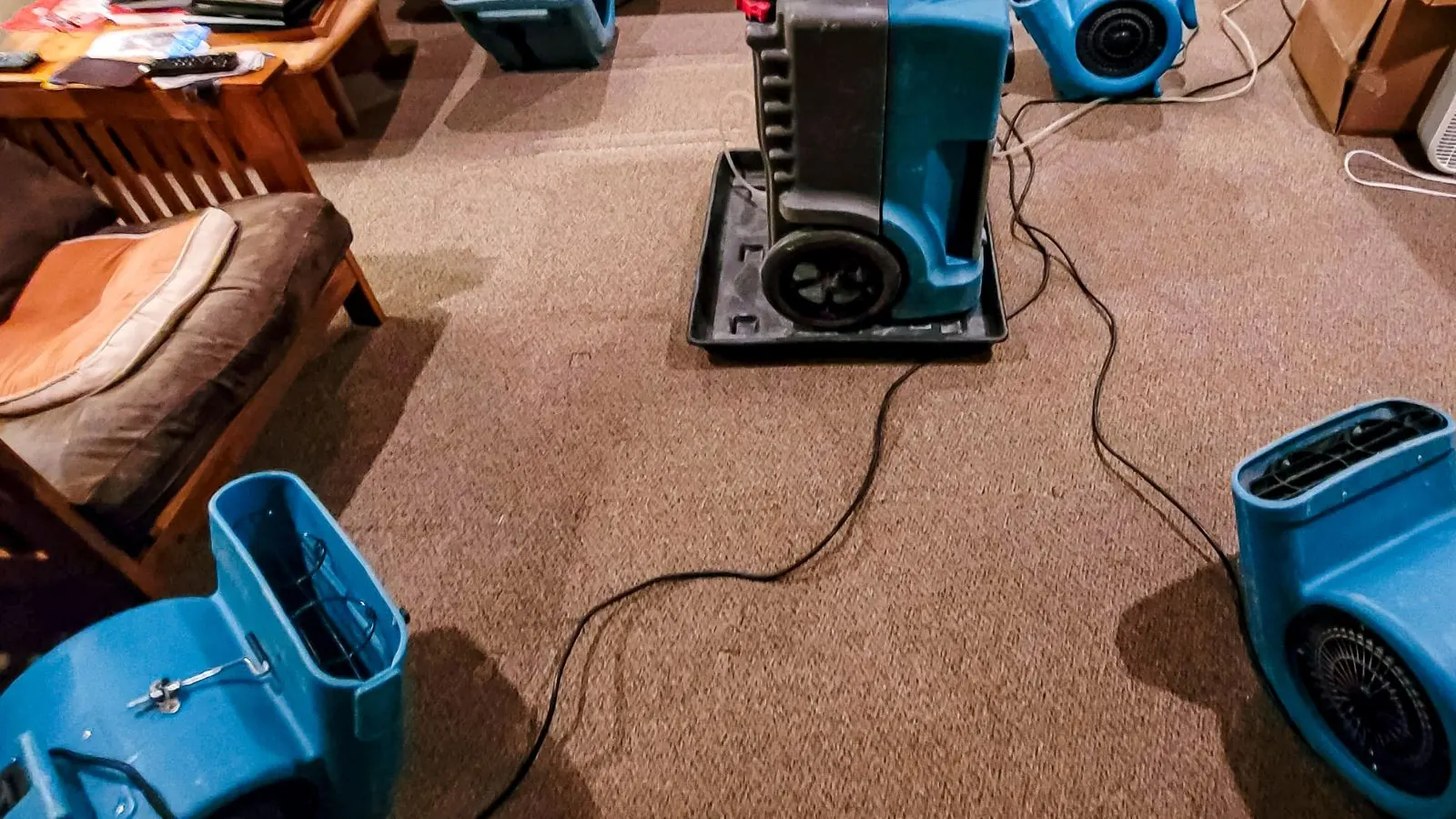
Deep water goes first, usually with a submersible pump or a truck-mounted unit. Carpet is handled with a weighted extraction wand that presses the surface down so water in the pad comes up with it. Hard floors get wet vacuums and squeegees, and tight spots under cabinets are cleared with narrow tools.
Once the visible water is gone, moisture meters and a thermal imaging camera show where it traveled. A dry-looking baseboard can still hold wet drywall behind it. That reading decides whether the next step is air movers and LGR dehumidifiers, a flood cut in the wall or removal of the pad.
- Shallow spill on tile or vinyl: wet vacuum, then towel dry and add air movement.
- Soaked carpet and pad: extraction wand, with pad removal if the pad is saturated.
- Water inside a wall cavity: moisture mapping, then open the wall at the wet line.
- Deep water in a basement: pump out in stages so the foundation is not stressed.
Why Marshfield's coastal flooding changes the job
Marshfield's draft Multi-Hazard Mitigation Plan records that the Brant Rock Esplanade floods two to three times a year, with depths of one to two feet. That matters for extraction because floodwater from the ocean or a river is treated as grossly contaminated under the ANSI/IICRC S500 standard, so porous materials are judged more cautiously than they would be after a clean pipe leak.
The same plan says the 2018 storm produced the highest still-water levels since the Blizzard of 1978, with more than three feet of standing water in places. If your street floods with the tide, tell the dispatcher whether the water is still rising, because a crew will plan pumping around the next high tide.
Insurance and photos after the water is out
Sudden and accidental water damage is often covered by a homeowners policy, while flood damage is usually excluded and needs separate flood coverage. The Massachusetts Division of Insurance says standard homeowners policies do not cover flood, and that a National Flood Insurance Program policy typically has a 30 day waiting period.
Check your policy and ask your insurer before major work starts. Dated photos taken before extraction, along with a note of what was moved, give an adjuster a clear picture of the loss.
Questions homeowners ask
Is emergency water extraction available in Marshfield at night?
Yes. The emergency line is answered 24 hours a day, and same-day response is offered when crews are available. Call (781) 621-1785 and describe the depth of the water, the source and whether the power is on.
How long can carpet stay wet before it becomes a problem?
Federal mold guidance recommends drying wet materials within 24 to 48 hours. Carpet pad holds water longer than the surface carpet, so soaked pad is usually removed rather than dried in place.
Can I extract the water myself with a shop vacuum?
For a small clean-water spill on a hard floor, a wet and dry vacuum can work. Do not use any vacuum near standing water with electrical risk, and never on water from a sewer backup or a tidal flood.
Does extraction include drying the building?
No. Extraction removes liquid water. Drying is a separate stage that uses air movers and dehumidifiers to pull moisture out of materials, and it is checked with a moisture meter until readings return to normal.
What if the water came from outside the house?
Water from storms, tides or overflowing rivers is handled as contaminated. Expect protective gear, tighter limits on what can be saved and a closer look at carpet, insulation and drywall.
Still have a question about water extraction? Call (781) 621-1785 and ask us directly.