

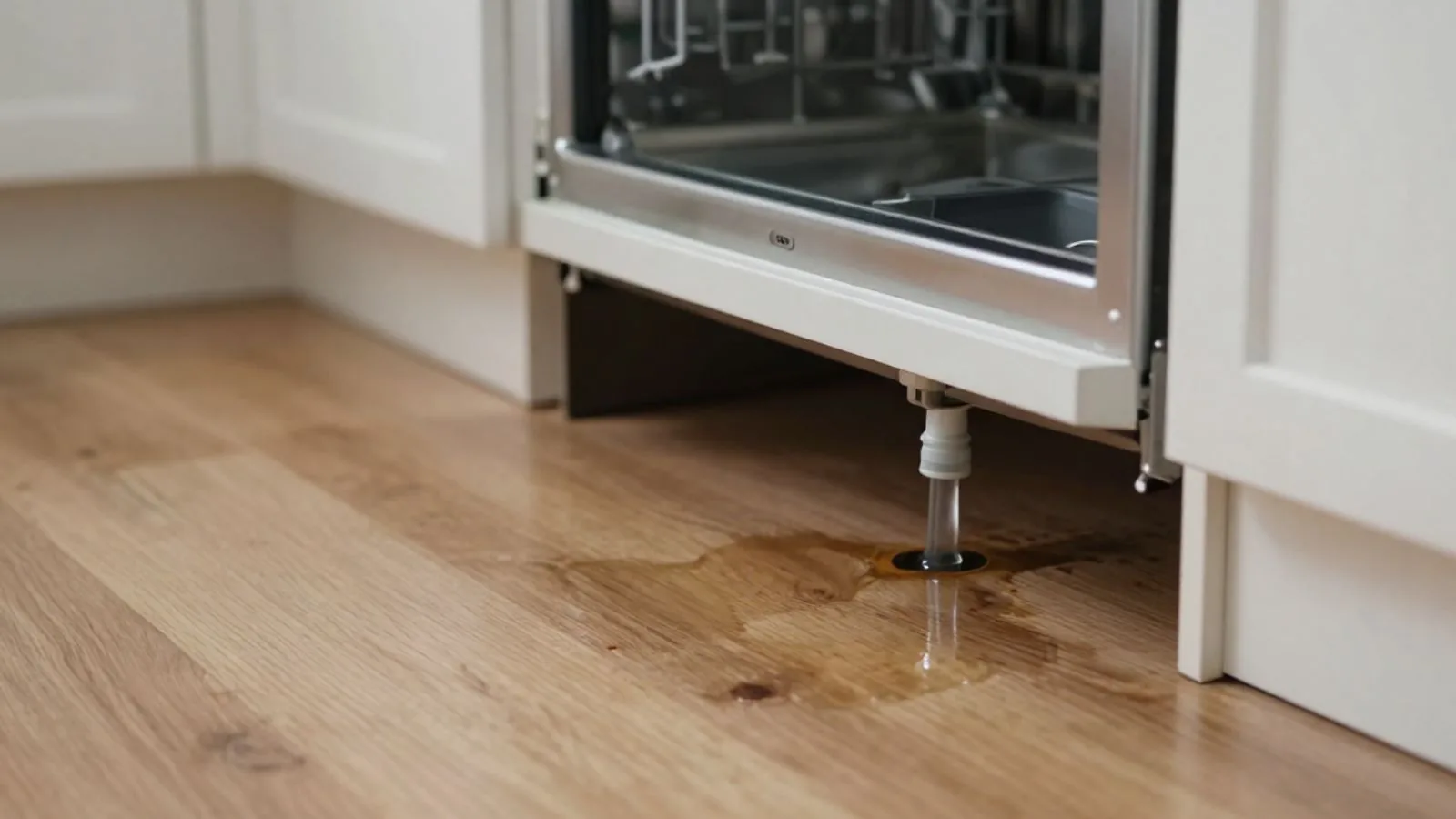
How appliance leaks cause damage
Appliance leak water damage is the wetting of floors, cabinets and walls after a washer, dishwasher, refrigerator or water filter leaks. These leaks are quiet. A cracked supply hose or a loose clamp can drip behind a machine for days, and the first sign is often a soft floor or a musty smell.
Marshfield is mostly owner-occupied housing. The Census QuickFacts figure for 2019 to 2023 is 81.0 percent, which means the cleanup bill and the claim usually fall on the homeowner. Fixing the source quickly keeps the bill small.
What to do first when an appliance is leaking
- Unplug the appliance only if the outlet and the floor around it are dry. Otherwise shut power at the panel from dry ground.
- Close the supply valve behind or beside the appliance. For a washer, that is the two hose valves on the wall.
- Pull the appliance out only if it is safe to do so, and place towels to stop the water spreading to other rooms.
- Lift rugs and small items off the wet floor and photograph the damage.
- Call us before running fans or heaters if you suspect water is under cabinets or in a wall.
Clean water, gray water and what it means
Under the ANSI/IICRC S500 standard, water from a supply line is Category 1, clean at the source. Water from a dishwasher or washing machine discharge is Category 2, which carries some contamination. That distinction affects what gets removed. Category 2 water that soaks into carpet or the base of a wall is usually treated more cautiously than a clean pipe leak.
If a leak has run long enough that it has become gray or worse, we say so before work begins. See our kitchen water damage page for how cabinets and floors are handled.
Where the water hides
Water from a dishwasher drains toward the toe kick and under the cabinet base. Water from a laundry room goes along the wall and into the subfloor. A refrigerator ice maker line can drip behind a wall for a long time before the floor shows damage.
We use moisture meters and a thermal imaging camera to trace it, then open toe kicks, remove baseboards and drill small relief holes only where needed. Drying uses air movers and dehumidifiers, and we check readings until the materials reach their normal level.
Which appliance leaks do the most damage
Washing machine supply hoses and drain hoses fail under pressure and can run until someone is home. Dishwasher door seals and inlet valves leak into the cabinet base and under the floor. Refrigerator ice maker lines drip behind the unit for weeks without a sound.
Water that comes from a clean supply line is Category 1 at first, and water that comes out of a washing machine or dishwasher drain can be Category 2. That difference affects how carpet, pad and drywall are treated.
Pull the appliance out safely
Shut off the valve behind the appliance, unplug it only if the outlet and floor are dry and slide it out slowly. A refrigerator is heavy and can scar a wet floor. If you are unsure, wait for a crew. Look behind and under the unit for water on the subfloor and on the back wall.
We check the cabinet bases and the wall behind the appliance, because water follows the path of least resistance. See kitchen water damage restoration when cabinets are involved.
Claims, replacement and prevention
The Massachusetts Division of Insurance says non-flood water damage is generally covered when it is sudden and accidental, and 48.6 percent of 2024 homeowner claims in the state were non-flood water and freezing. A slow leak that was ignored may be treated differently. Check your policy and ask your insurer.
After the cleanup, replace worn hoses and clamps, and install a water alarm under dishwashers and washers. If the leak reached the floor surface, our hardwood floor page covers what happens to wood.
Questions homeowners ask
Is emergency appliance leak cleanup available in Marshfield after hours?
Yes. Call (781) 621-1785 at any time. Same-day response is offered when crews are available.
Is dishwasher water considered dirty?
Dishwasher and washing machine discharge is gray water under the S500 standard. It contains some contamination, so porous materials that were soaked are handled more cautiously.
How do I check for a hidden leak behind a washer?
Look for a soft floor, a musty smell or a stain on the wall behind the machine. A moisture meter reading above the surrounding area confirms it.
Do I have to replace the floor after an appliance leak?
Not always. If the water is caught early and the floor is dried quickly, many floors can be kept. Soaked subfloor or swollen laminate usually has to be replaced.
Still have a question about appliance leak water damage? Call (781) 621-1785 and ask us directly.