

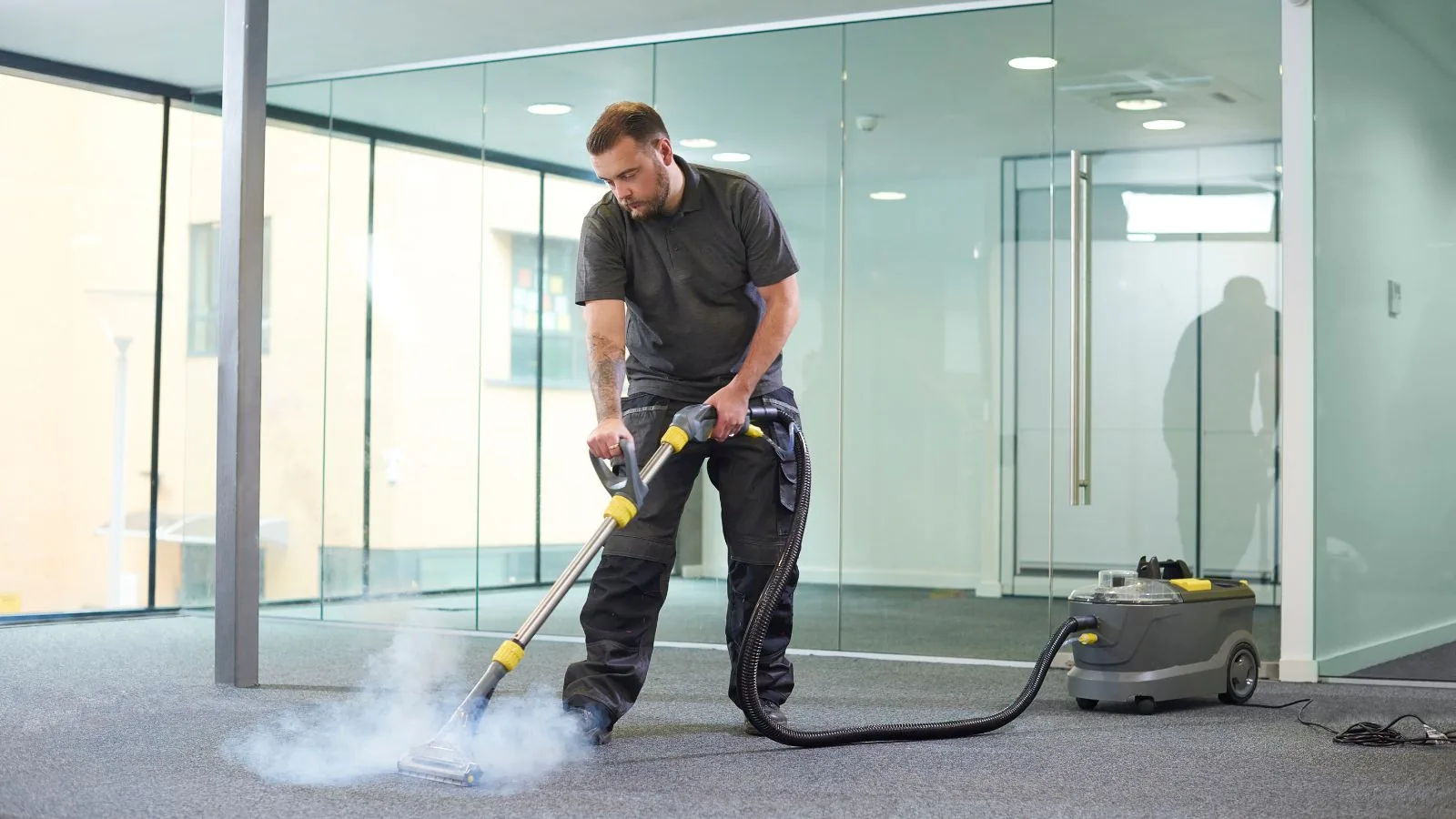
Commercial water damage and why speed matters
Commercial water damage is the flooding or wetting of a shop, office, restaurant, rental unit or multifamily building from a pipe failure, sprinkler discharge, roof leak, storm or sewer backup. The difference from a house is the stakes. A closed doorway means lost sales, idle staff and tenants who call the landlord.
Marshfield's business districts include the Webster Square area, with its grocery, retail and bank tenants, and smaller plazas and shops along Routes 139 and 3A. Roofs, rooftop units and shared plumbing lines in strip buildings can send water into several suites at once.
What to do first in a wet commercial space
- Protect people first. Keep staff and customers away from wet floors and from any area near electrical equipment.
- Shut off the water at the main valve or the sprinkler riser if you know how and it is safe.
- Turn off power to the affected area at the breaker only if you can reach it dry.
- Move inventory, paper records and electronics up and away from the water.
- Photograph the damage and call us. Tell the dispatcher the square footage, the floor type and who owns the building.
Owner, tenant and landlord roles
In a leased space, the lease decides who is responsible for the building and who carries insurance on contents and improvements. Landlords usually control the base building and the roof, and tenants often insure their own stock and fit out. Tell your landlord right away and read the lease.
We work with the property manager, the owner or the tenant, whoever signs the work order. A clear scope, written readings and photos help each party's insurer see what happened. See structural drying for how readings are logged.
Large floors, finishes and equipment
Commercial floors are often concrete with tile, vinyl composition tile or carpet tile. Carpet tile can be lifted and dried or replaced by the square. Concrete is slow to dry and needs dehumidification and controlled airflow. We measure wall bottoms, ceiling tile and insulation because water travels.
Kitchens and restaurants add grease traps, floor drains and food safety concerns, and your local health authority may need to be told about a sewage event. For waste water see sewage backup cleanup. For wind driven water and roof damage see storm water damage cleanup.
Keeping a business running during cleanup
A wet business can often stay partly open. We section off the wet area, run air movers and dehumidifiers there and keep the rest clear. Noise from equipment is real, so we discuss schedules. For retail, a lobby that dries first can reopen first.
Restaurants and food shops have extra rules. Stock that was touched by contaminated water is thrown away. Equipment may need to be cleaned and sanitized, and local health authorities may need to be told about a sewage event.
Multifamily and shared walls
In apartment buildings and strip buildings, water crosses into neighbors through ceilings and wall cavities. We document every affected unit and take readings in each. Property managers need a single clear record, and tenants need to know what happens to their things.
If an upstairs unit caused the loss, ask the manager for the cause and the shutoff location. Our ceiling page explains what to do when a leak comes through from above.
The standard behind commercial scopes
We scope commercial jobs against the ANSI/IICRC S500 standard, an industry reference, so owners, tenants and insurers see the same categories and classes. A written scope that names the water category and the drying goal gives everyone a common starting point.
Documentation for the insurer and the landlord
Commercial claims often need the cause of loss, the date and time, the areas affected and the work performed. We record moisture readings, equipment placed and removed, and materials taken out. Keep your receipts for emergency repairs and keep damaged items until the adjuster says otherwise.
The Marshfield Building Department handles building, plumbing and electrical permits through its online portal, so ask whether a rebuild after a flood needs one. The department also enforces the town's Floodplain Bylaw.
Questions homeowners ask
Is emergency commercial water removal available in Marshfield?
Yes. Call (781) 621-1785 at any hour. Same-day response is offered when crews are available. Give the address, the square footage and the cause if you know it.
Can you work around business hours?
Often yes. Scheduling depends on the scope, and we discuss options for keeping part of the space open.
Do you deal with the landlord and the insurance adjuster?
We provide the scope, photos and readings. The owner, tenant and insurer make their own coverage decisions.
What if water came from a unit above mine?
Document it, tell the landlord and call us. We dry your space while the source is stopped upstairs.
Still have a question about commercial water damage? Call (781) 621-1785 and ask us directly.