

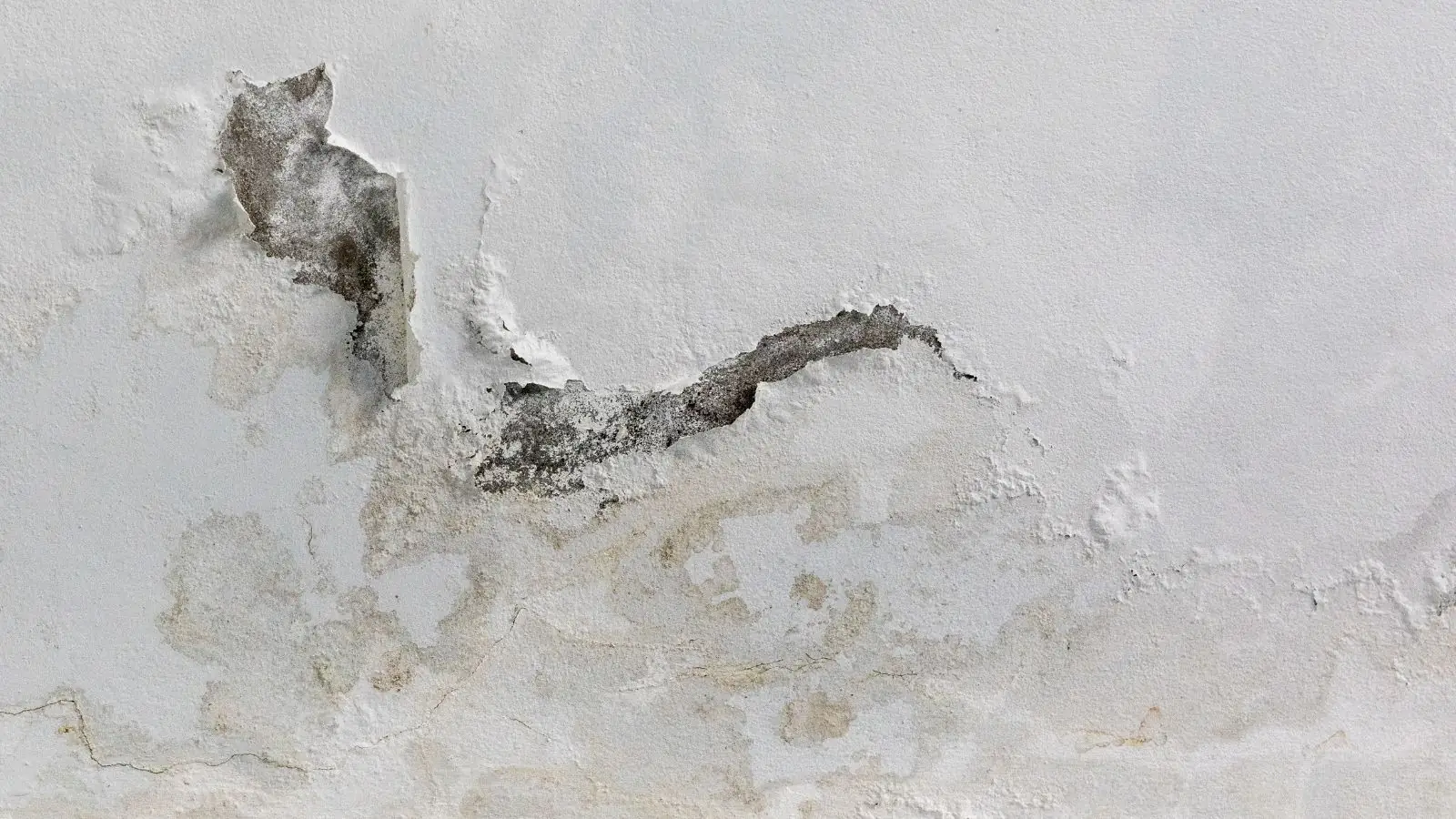
What ceiling water damage tells you
Ceiling water damage is the staining, sagging or peeling that appears when water collects in the space above a ceiling and soaks the drywall or plaster. The ceiling is rarely the source. It is the lowest point where water finally shows, so a brown ring in a bedroom can come from a bathroom, a roof or an air handler several feet away.
A bulging ceiling is the most urgent sign. Drywall that is full of water can drop without warning, and the water inside can carry insulation and dust with it.
If water is coming through the ceiling right now
- Move people and pets out from under the area and keep everyone out of the room if the ceiling is sagging.
- If a light fixture is wet or dripping, do not touch the switch. Cut power to that circuit at the panel only from dry ground.
- Place a bucket under the drip and move furniture aside. Cover what cannot be moved with plastic.
- If water is pooling in a bulge, a small hole at the lowest point lets it drain into a bucket in a controlled way. Do not stand directly under it.
- Call the emergency line and tell us what is above the ceiling, such as a bathroom, an attic or a roof.
Do not use a household vacuum on a wet ceiling or reach into the opening. Wait for a crew if the sag is wider than a dinner plate.
Finding the source above the ceiling
We check with moisture meters and a thermal imaging camera from below, then follow the wet pattern up. A line of stains that follows a joist usually points to a supply or drain line. A round stain under a roof valley or a chimney points to flashing. A stain beside an exterior wall can point to a window or siding failure.
If the source is plumbing above, a plumber must repair it. If it is a leaking water heater in an attic or a drip from an air conditioner drain line, the appliance is the fix. We dry what the water touched.
Roof leaks and ice dams on the South Shore
Roof leaks are covered on this page because they end up as ceiling damage. Wind-driven rain from coastal storms finds loose shingles and failed flashing, and winter ice dams force meltwater under shingles and into the attic. Marshfield's Multi-Hazard Mitigation Plan lists nor'easters among its top hazards and puts annual snowfall near 59 inches.
A roofer fixes the roof. We handle the inside, which includes drying the attic deck, removing wet insulation and cutting out drywall that has stayed soaked. A temporary tarp from a roofer keeps more rain out while repairs are scheduled.
The Massachusetts Division of Insurance notes that ice dam and snow weight damage is generally covered, but only for the area that was damaged. Photograph the roof edge, the attic and the ceiling before cleanup. See our storm water damage page for wind and rain events.
How a ceiling is dried and repaired
Wet insulation comes out first because it holds water against the drywall. Saturated or sagging drywall is cut back to dry material, and the surrounding joists are dried with air movers and dehumidifiers. Plaster ceilings are tested before any decision, because older plaster can often be dried and kept.
Once readings are normal, the opening can be patched, textured and painted. We dry and open. Patching and painting can be done by us or by your own painter, and the scope is explained before work starts.
How the industry standard guides ceiling work
The ANSI/IICRC S500 standard is the industry reference we use to decide what to dry and what to cut out. For ceilings, it points toward removing saturated drywall and wet insulation, since both hold water against framing, and toward logging readings until the cavity is dry.
Documenting ceiling damage for a claim
Sudden and accidental leaks are often covered, while slow drips over weeks often are not. Check your policy and ask your insurer. Take dated photos of the stain, the source and any contents damaged, and keep any failed part.
Questions homeowners ask
Is emergency ceiling leak repair available in Marshfield at night?
Yes. Call (781) 621-1785 at any hour. Same-day response is offered when crews are available. Tell the dispatcher whether the ceiling is sagging and what sits above it.
Should I puncture a bulging ceiling?
A small hole at the lowest point of a bulge can relieve trapped water into a bucket and prevent a larger collapse. Stay out from directly underneath and keep clear of any lights.
Can a brown ceiling stain be painted over?
Only after the cause is fixed and the area is dry. Painting over a damp stain hides a problem that can still grow, and the stain may bleed through.
Who fixes a roof leak, a roofer or a restoration company?
A roofer repairs the roof. A restoration company dries the attic and ceiling and removes wet material. Many jobs need both.
Still have a question about ceiling water damage repair? Call (781) 621-1785 and ask us directly.