

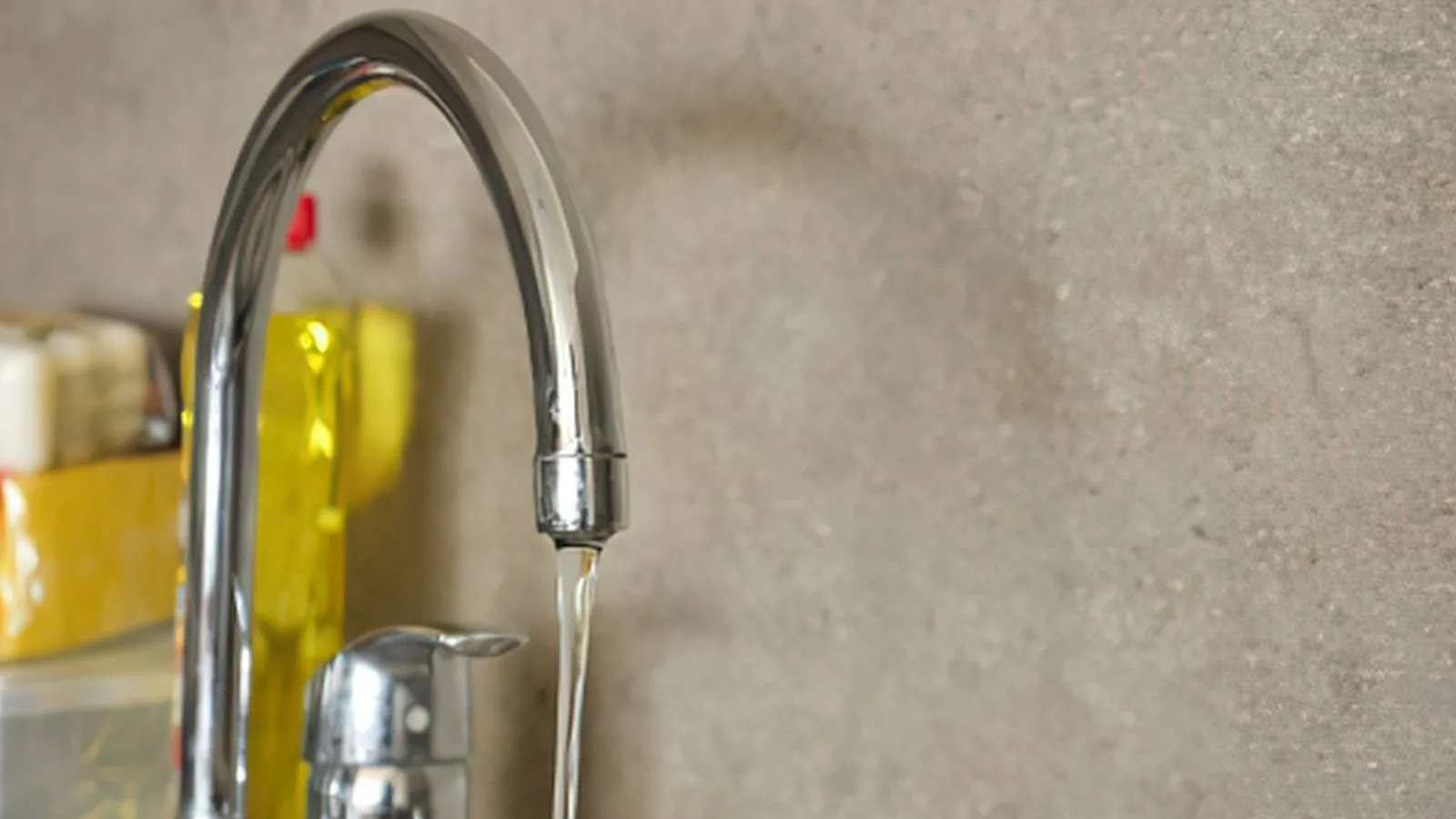
Why kitchens take water damage so easily
Kitchen water damage is the wetting of cabinets, flooring, subfloor and walls after a sink line, dishwasher, refrigerator line or faucet leaks. The kitchen holds more water sources in a small space than any other room, and the damage hides behind toe kicks and inside cabinet bases where nobody looks.
Most kitchen cabinets are built from plywood or particleboard. Particleboard swells and crumbles when wet, and once it swells it does not shrink back. That is why a slow leak under a sink can end with a cabinet that has to be replaced.
First steps when a kitchen leak is found
- Close the shutoff valves under the sink or behind the appliance, or the main valve if you cannot find them.
- Turn off the dishwasher and unplug it only if the outlet and floor are dry.
- Empty the cabinet under the sink and set a bucket under any drip.
- Mop up standing water and lift rugs. Do not run a household vacuum on a wet floor.
- Photograph the leak, the cabinet and the floor and call us before anything is thrown away.
What gets checked and what gets removed
We probe the cabinet base, the toe kick and the floor with moisture meters, then open the toe kick and pull baseboard to look behind. A thermal imaging camera shows wet areas that are cool to the touch. Solid wood and plywood cabinets can often be dried in place. Particleboard that has swelled usually has to be replaced.
Floors depend on the material. Vinyl and tile over a dry subfloor can often stay, while laminate and engineered wood may buckle. See our hardwood floor page for wood floors, and appliance leak cleanup when a dishwasher or refrigerator caused it.
Drying under and behind the cabinets
Cabinets block airflow, so drying often means creating openings. We remove toe kicks and drill small ports so air movers can push dry air under the cabinet base, and we place dehumidifiers to pull moisture out of the room. Countertops and stone do not need drying but we check the cabinet boxes below them.
Readings are taken each visit until the cabinet base, subfloor and wall bottoms reach a normal level. If it was a long running leak, we look for mold growth and talk through options before the cabinets go back.
Sinks, dishwashers, refrigerators and supply lines
The most common kitchen leaks come from a sink drain trap, a faucet supply line, a dishwasher inlet or drain connection, a refrigerator ice line and a garbage disposal seal. Most are slow. They drip into the cabinet and run along the back of the base until the floor underneath is soaked.
Check under the sink with a dry paper towel. Wet paper means an active leak. Dark stains, swollen cabinet bottoms or a musty smell mean it has been going on a while. See appliance leak water damage for dishwashers and refrigerators.
Tile, vinyl and the floor under the cabinets
Kitchen floors are often tile or vinyl over plywood, and the cabinets sit on top. Water gets under the cabinets and under the flooring edge. Vinyl plank floors can trap water beneath them, and tile grout lets it through.
If the floor is under the cabinet run, we may need to remove the toe kick or a section of flooring to dry it. We talk through that with you before cutting anything.
Reading the water category in a kitchen
The ANSI/IICRC S500 standard separates clean supply water from dishwasher and washer discharge, and the difference matters in a kitchen. A supply line leak is usually clean at first, while drain water is gray and calls for more cleaning and more removal.
Rebuild, permits and your claim
Kitchen rebuilds often involve plumbing, electrical and building work. The Marshfield Building Department lists building, plumbing and electrical permits in its online permit portal, and the town links to the state's home improvement contractor and construction supervisor license lookups. Ask the department which permits apply to your rebuild.
The Massachusetts Division of Insurance says non-flood water damage that is sudden and accidental is generally covered, and that adjusters need documentation. Photograph before you demolish, keep receipts and check your policy.
Questions homeowners ask
Can cabinets be saved after a kitchen leak?
Often yes if they are plywood or solid wood and were wet for a short time. Particleboard that has swelled usually cannot be saved.
How do I know if water is under my kitchen floor?
Look for cupping, a soft spot, a stain near the dishwasher or a musty smell. A moisture meter reading will confirm it.
How long does it take to dry a kitchen?
It depends on the materials and how long they were wet. Readings decide when the work is done.
Do I need to remove the countertop to dry cabinets?
Usually not. Drying ports and airflow can reach the cabinet base without moving the counters.
Still have a question about kitchen water damage? Call (781) 621-1785 and ask us directly.