

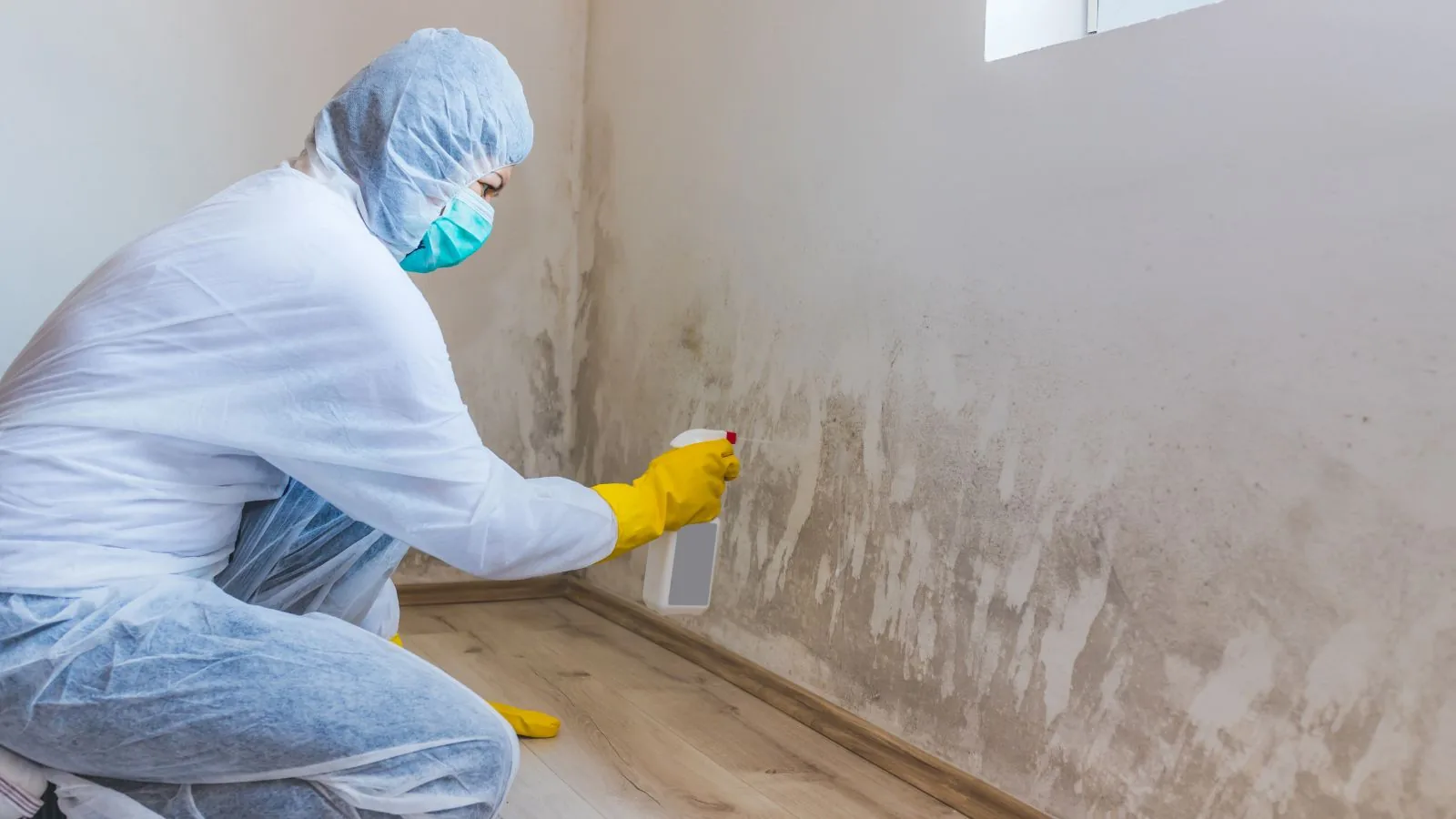
Mold starts with water
Mold remediation is the containment and removal of mold growth and the drying of the materials it grew on. Mold needs moisture, a food source such as drywall paper or wood, and time. Water damage that stays wet for a day or two can begin growth, and that is why drying fast matters most.
Marshfield's coastal humidity, tidal flooding and about 48.8 inches of annual rain, as listed in the town's Multi-Hazard Mitigation Plan, mean basements and crawl spaces stay damp. Mold here often follows a leak, a flood or a roof problem that nobody saw.
What to do when you see or smell mold
- Do not disturb it. Brushing or dry scrubbing spreads spores through the air.
- Find and stop the water source if you can do so safely.
- Turn off the HVAC fan if the mold is near a return or supply vent.
- Keep children, pets and anyone with breathing problems away from the area.
- Call us for an assessment before you try to remove a large area yourself.
Do you need testing first
Mass.gov states that the Massachusetts Sanitary Code does not require testing to determine excess moisture or mold, and that visible growth and moisture readings are usually enough to act on. Testing can still be useful for a home sale, a loan or a dispute.
Most remediation scopes come from what is seen and measured. We look at the growth, find the moisture source and check surrounding materials with a moisture meter and thermal camera.
How remediation works step by step
The area is isolated with plastic sheeting and negative air so spores do not travel. Porous materials with growth, like drywall and insulation, are removed and bagged. Hard surfaces such as framing are cleaned, and the space is dried fully. Air scrubbers with HEPA filters clean the air during the work.
The key step is correcting the moisture. If water keeps coming in, mold returns. See structural drying, basement water damage cleanup and crawl space water damage for the places where it most often returns.
Where mold hides after water damage
Mold favors the back of drywall, the underside of carpet pad, the bottom of baseboard and the dark corners of basements and crawl spaces. It grows on cellulose, so paper faced drywall and wood framing are common homes for it. Visible spots are often the edge of a larger patch.
A musty smell with no visible growth often means mold inside a wall cavity or beneath flooring. Moisture meters and a thermal imaging camera find the damp area. We may open a small inspection hole to look rather than guess.
Containment, air filtration and clean up
Containment keeps spores in the work area. Plastic barriers seal doorways, and a negative air machine with a HEPA filter pulls air out of the space. Workers wear respirators, gloves and coveralls. Affected drywall is cut out in manageable pieces and bagged before it leaves the room.
Framing is cleaned with HEPA vacuuming and damp wiping, then dried. The ANSI/IICRC S520 standard describes this approach as an industry reference. We do not scrub dry surfaces, because that sends spores into the air.
Licensing, cost drivers and insurance
The state reports that no license is required for mold remediation in Massachusetts, so ask a company for a written scope, how it contains the area and how it will verify results. We are licensed and insured, and we explain the scope and price before work starts.
Cost depends on the area affected, the materials involved, how hard the space is to reach and whether a rebuild follows. Insurers often cover mold that results from a covered sudden loss and often exclude mold from long term leaks. Ask your insurer and read the policy language.
Questions homeowners ask
Is mold remediation an emergency?
Usually not by itself, but ongoing water is. Stop the source first and then schedule assessment.
Do I need a mold test before remediation?
Massachusetts does not require testing to act on visible mold and moisture. Testing can help with sales, loans or disputes.
Can I remove mold myself?
Small patches on hard surfaces can be cleaned by homeowners. Larger areas, porous materials or health concerns call for a professional.
Will the mold come back?
Only if moisture returns. Fixing the source and drying fully prevents regrowth.
Still have a question about mold remediation? Call (781) 621-1785 and ask us directly.