

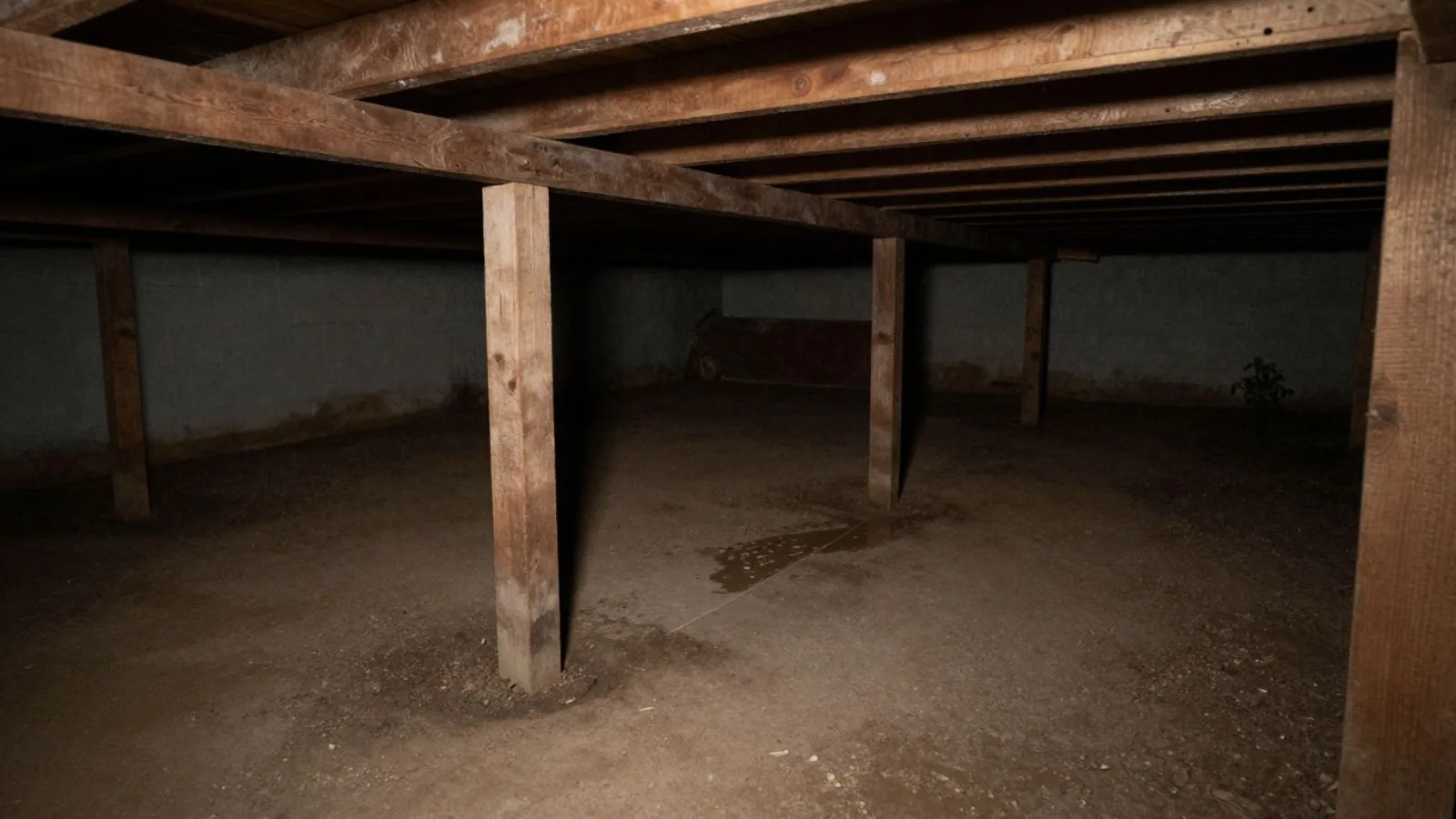
Water under the house, and why it matters
Crawl space water damage is the wetting of the soil, framing, insulation and ductwork beneath a raised floor. A crawl space sits close to grade, so rain, high groundwater, a burst pipe or a failed sump can put water there, and the damp air rises into the rooms above.
Marshfield's Multi-Hazard Mitigation Plan puts annual rainfall near 48.8 inches. Houses near tidal rivers and marsh edges can see water rise under the floor during storms. A damp crawl space is also where small plumbing leaks go unnoticed for months.
What to do first if the crawl space is wet
- Do not go into a crawl space with standing water, exposed wiring or a lit pilot nearby.
- Turn off power to anything in the crawl space only from the panel and only if you can reach it from dry ground.
- Shut off the main water valve if you suspect a pipe leak.
- Look at the access hatch from outside if it is safe. Take a photo of any water line or stains on foundation walls.
- Call us to assess it and pump it down.
Pumping, drying and insulation removal
We pump standing water with submersible pumps and drain it away from the foundation. Wet fiberglass insulation sags, holds water against the floor above and loses its value, so it is removed. Subfloor and joists are dried with air movers and dehumidifiers placed through the access.
Moisture meters tell us when the wood has returned to a safe level. A thermal imaging camera helps trace water into the walls or floor above. When framing stays wet, it can become a place for mold, so we test and clean if the readings or odor call for it.
Sump pumps and where the water can go
Marshfield's sewer regulations in Chapter 223 say sump pumps, roof drains and foundation drains may not connect to the sanitary sewer. If you add or move a pump, the discharge must be directed outdoors in a way that does not return water to the foundation. Ask the Marshfield Building Department before you change a drain system.
If the water came from a plumbing failure rather than the ground, our burst pipe page explains the repair and drying sequence. If the water entered from a storm, see storm water damage.
Why crawl spaces stay damp and what to look for
Crawl spaces sit close to the soil, with vents or foundation walls that let humid air in. Poor grading, a failed vapor barrier or a plumbing leak above can add liquid water. The result is wet insulation, a musty smell upstairs and floors that feel springy.
Look for sagging insulation, condensation on pipes, a dark stain on joists and standing water on the ground. A flashlight, a mask and gloves are the bare minimum, and a tight space is not safe if you cannot see well. Call us if you are unsure.
Insulation, vapor barrier and drying
Wet fiberglass insulation sags and holds water against the subfloor, so it is removed. A vapor barrier is a plastic sheet that covers the soil. If it is torn or missing, moisture rises again after drying. We note it in the report, and a contractor can install a new one.
After removal, dehumidifiers and air movers dry the joists. See mold remediation if growth is present on wood.
Vapor barrier, mold and the floor above
A torn or missing vapor barrier lets ground moisture rise, and it often explains why a floor feels cold and damp. A plastic ground cover with sealed seams reduces that moisture. We can recommend a fix, but a contractor installs encapsulation.
If there is visible mold, a musty smell or dark staining on framing, see our mold remediation page. Mold needs moisture, and testing and removal should follow the ANSI/IICRC S520 standard. Health questions belong with a physician.
Questions homeowners ask
Can I pump out a flooded crawl space myself?
Sometimes, but do not enter if there is standing water near wiring or heating equipment. A submersible pump from outside the hatch can lower the level. Call us if the water keeps returning.
Does crawl space water damage need insulation replaced?
Wet fiberglass insulation is usually removed because it holds water against the subfloor. Closed-cell foam can sometimes be dried and kept.
How do I know if my crawl space has a moisture problem?
Signs include a musty smell, sagging insulation, a cold damp floor, rust on ducts or visible water lines on the foundation. A moisture meter on the floor joists gives a clear reading.
Will homeowners insurance cover crawl space water damage?
Depends on the cause. Sudden and accidental plumbing leaks are often covered, while groundwater is usually not. Check your policy and ask your insurer.
Still have a question about crawl space water damage? Call (781) 621-1785 and ask us directly.