

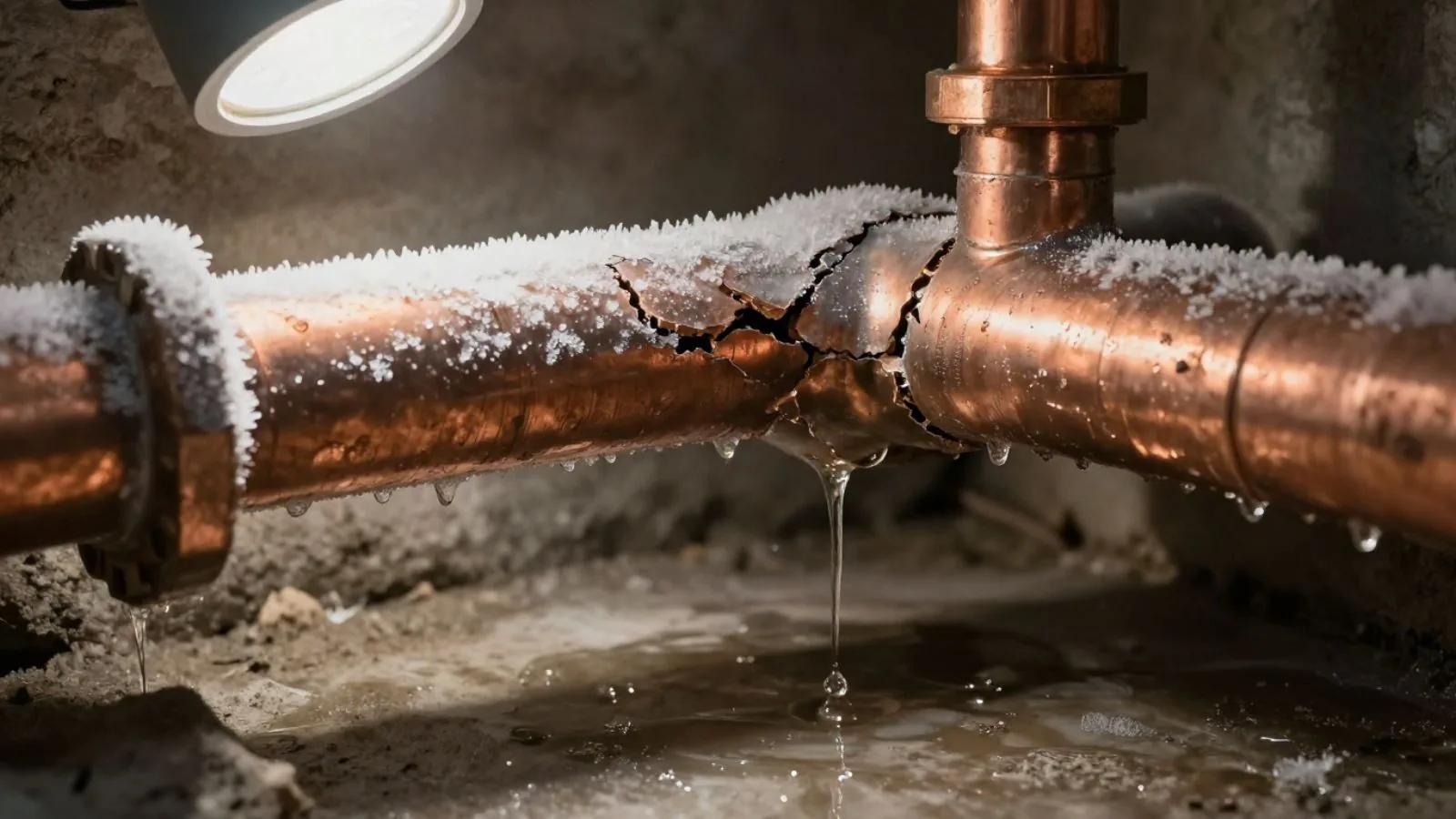
How a frozen pipe turns into water damage
Frozen pipe water damage is the flooding that follows when ice inside a pipe expands, cracks the pipe wall and then melts. The crack is often hidden until the line thaws and starts to leak, which is why many Marshfield homeowners find the water hours after the cold snap has passed.
Marshfield's Multi-Hazard Mitigation Plan puts yearly snowfall at about 59 inches and rainfall at about 48.8 inches. Long cold stretches test exterior walls, garages and crawl spaces, so a house that rode out a mild January can still lose a line in the first hard freeze of the next.
What to do right now if a pipe has frozen or split
- If a pipe is frozen but not leaking, open the faucet slightly and warm the area with a space heater kept well away from anything flammable. Never use an open flame.
- If water is already coming out, close the main shutoff immediately and open the lowest faucet to drain the system.
- Keep cabinet doors under sinks open on exterior walls so room heat reaches the pipes.
- Do not touch electrical devices that are wet or near dripping water.
- Call the emergency line before the area is fully thawed if you can see a bulge, a crack or frost on the line.
A split pipe may not leak until it thaws. If you suspect a freeze, leave the main off until the line has been checked.
Where frozen pipes usually fail in New England homes
Pipes in unheated crawl spaces, garage walls, exterior kitchen walls and attic runs fail most often. In older Marshfield homes with a finished room added over a garage or a porch, supply lines often run through a cold cavity that was never insulated for them.
Check your own home's year and framing, because a house built or renovated at different times can have lines in very different conditions. If the failed line was in a crawl space, our crawl space water damage page covers drying under the floor.
How we dry after the thaw
We start by finding the wet boundary with moisture meters and a thermal imaging camera. Standing water is extracted, wet insulation is removed and the cavity is opened if readings show water inside the wall. Air movers and LGR dehumidifiers then run until the framing is back within the dry standard.
Plaster, older plank sheathing and lath can hold water longer than modern drywall, so we check them on every visit. Ask us for the drying log when the job is complete. It records the readings from each day.
Cold-weather claims and prevention
The Massachusetts Division of Insurance reports that non-flood water and freezing made up 48.6 percent of homeowner claims in 2024. Freezing is usually treated as sudden damage, but insurers often expect you to have kept the heat on. Check your policy and ask your insurer what it requires if you plan to leave the house empty.
To reduce risk, insulate exposed lines, seal drafts around pipes, and let a faucet drip on the coldest nights. If you have already had a break, a plumber can reroute the line, and our burst pipe page explains how the wet-out is handled.
Questions homeowners ask
Is emergency frozen pipe cleanup available in Marshfield overnight?
Yes. Call (781) 621-1785 at any hour. Same-day response is offered when crews are available, and the dispatcher will tell you how to stop the water and protect the area while you wait.
Should I thaw a frozen pipe myself?
Only if it is not leaking. Warm air from a hair dryer or a space heater kept at a safe distance can work. Never use an open flame, and shut the main water off if you see a crack.
Can a pipe split without leaking right away?
Yes. Ice can hold a split closed until the line thaws, and the water appears afterward. That is why leaks often show up after the weather warms.
How long does frozen pipe water damage take to dry?
It depends on how much material got wet and how thick it is. Moisture readings decide when drying is finished, not a fixed number of days.
Still have a question about frozen pipe water damage? Call (781) 621-1785 and ask us directly.