

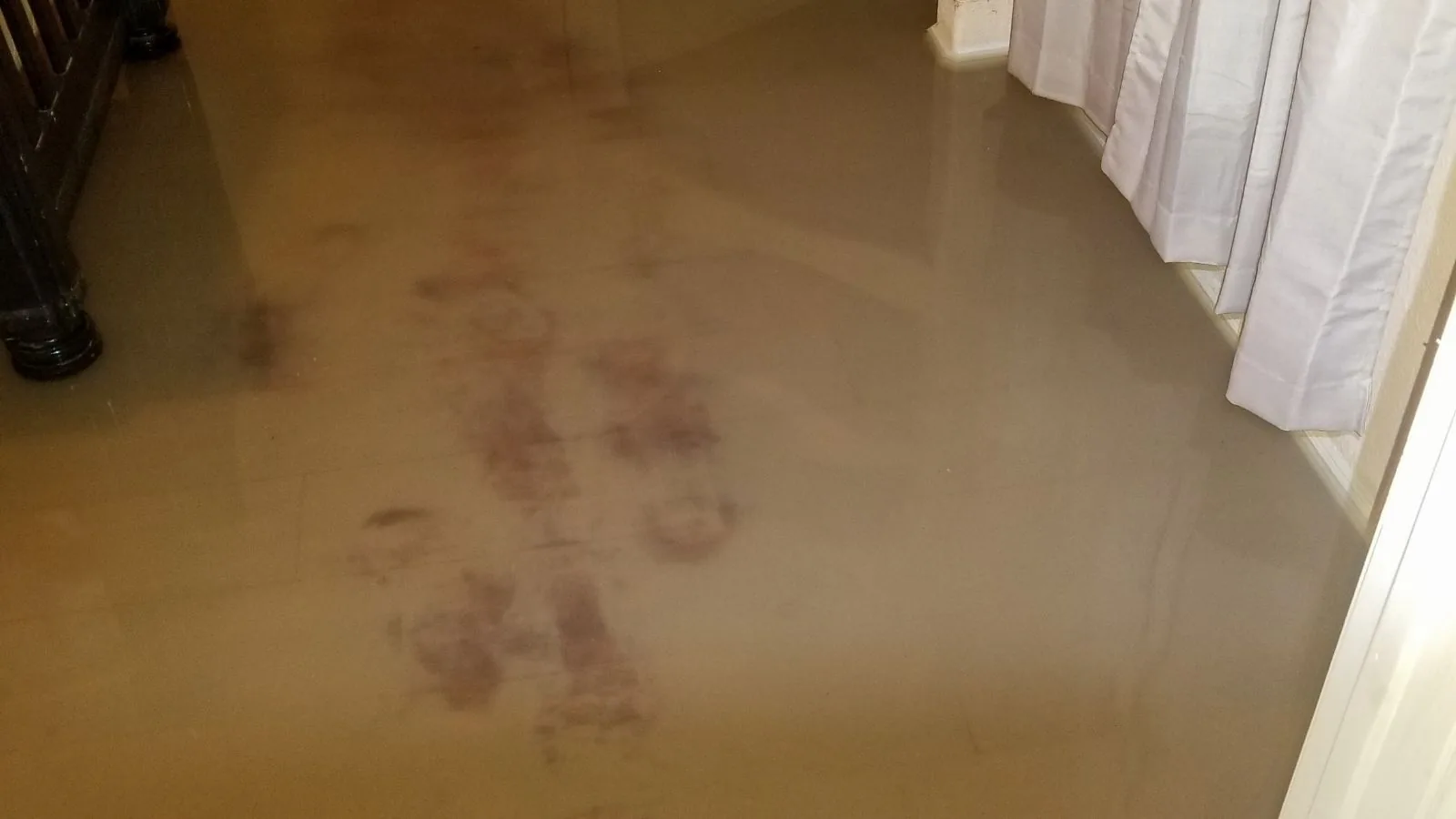
Basement water damage in a shoreline town
Basement water damage is the flooding or seepage of water into a below-grade space from groundwater, a failed sump pump, storm runoff or a plumbing failure. Marshfield has about 48.8 inches of rain a year according to its Multi-Hazard Mitigation Plan, and the same plan documents repeated coastal flooding that pushes water toward the lowest levels of homes.
A basement is also where a water heater, a washer and a sump live. A leak from any of them can start a flood, which is why we ask where the water came from before we plan the response.
Water in the basement: what to do right now
- Stay off the stairs if the water is deep. Do not enter if the water is near the electrical panel or outlets.
- Turn off the main breaker only if the panel is in a dry area you can reach safely. Otherwise call and wait.
- Stop clean water at its source if you can. Close the main valve for a plumbing leak.
- Do not pump a flooded basement all the way down in one go. The soil outside holds water, and a rapid drop can stress the foundation.
- Photograph the water line and the damage, then call the emergency line.
Sump pumps and the rule about sewer connections
A sump pump moves groundwater out of the basement. If it fails, a basement can flood within hours during heavy rain. Marshfield's sewer regulations in Chapter 223 say sump pumps, roof drains and foundation drains may not connect to the sanitary sewer, so the discharge must go outside and away from the foundation.
Ask a licensed plumber about replacing or backing up a failed pump. Remember that many pumps stop when the power goes out in a storm. A battery backup is a plumber's job, but a failed one is a common start to a basement flood.
Concrete, framing and stored belongings
We extract standing water, remove wet carpet and pad, and cut out drywall and insulation that stayed wet. Concrete walls and floors are dried with dehumidifiers and air movers. A thermal imaging camera and moisture meters show how far water traveled into wall bottoms.
Cardboard, paper and fabric stored at floor level are usually lost. Furniture and solid items can be cleaned. See carpet water damage for finished basement flooring, and sewage backup cleanup if the water smelled of waste.
Finished basements, stored items and what is salvageable
A finished basement holds carpet, drywall, insulation and furniture, and each reacts differently. Drywall that wicked more than a few inches of clean water is usually cut out. Carpet pad is replaced. Solid wood furniture and plastic bins can be cleaned and dried.
Paper, cardboard and fabric that sat in water for a day are hard to recover. Photographs and documents can sometimes be dried by freezing them flat, which stops mold until they can be treated. Sort items into keep, clean and discard, and photograph each pile.
Ask us before you throw away furniture or appliances that you plan to claim.
Drying concrete and what to expect
Concrete holds moisture and releases it slowly. A slab can feel dry on top while still holding water below. We use moisture meters and dehumidifiers and keep reading until the slab and the bottom of the walls are normal. Rushing the rebuild over damp concrete leads to peeling paint, lifting flooring and mold.
Basement flooding and insurance
The Massachusetts Division of Insurance explains that standard homeowners policies do not cover flood, and that sewer or sump backup is covered by flood policies only when a general flood is the cause. Ask your insurer whether you have a water backup endorsement. Check your policy and photograph everything before cleanup.
If your street floods with tides, check the FEMA flood map for your address and ask the Marshfield Building Department about rules for rebuilding in a flood zone.
Questions homeowners ask
Is emergency basement flood cleanup available in Marshfield at night?
Yes. Call (781) 621-1785 at any hour. Same-day response is offered when crews are available. Tell the dispatcher how deep the water is and where it came from.
Should I pump out my basement myself?
You can if the water is shallow and electrical hazards are clear. Pump gradually. Deep water or water near the panel needs a crew.
Will basement carpet be saved?
Carpet soaked by clean water can sometimes be dried quickly. Groundwater or sewage means the carpet is usually removed.
How do I stop my basement from flooding again?
A plumber or drainage contractor can assess sump pumps, grading and drainage. We handle the water that has already come in.
Still have a question about basement water damage? Call (781) 621-1785 and ask us directly.