

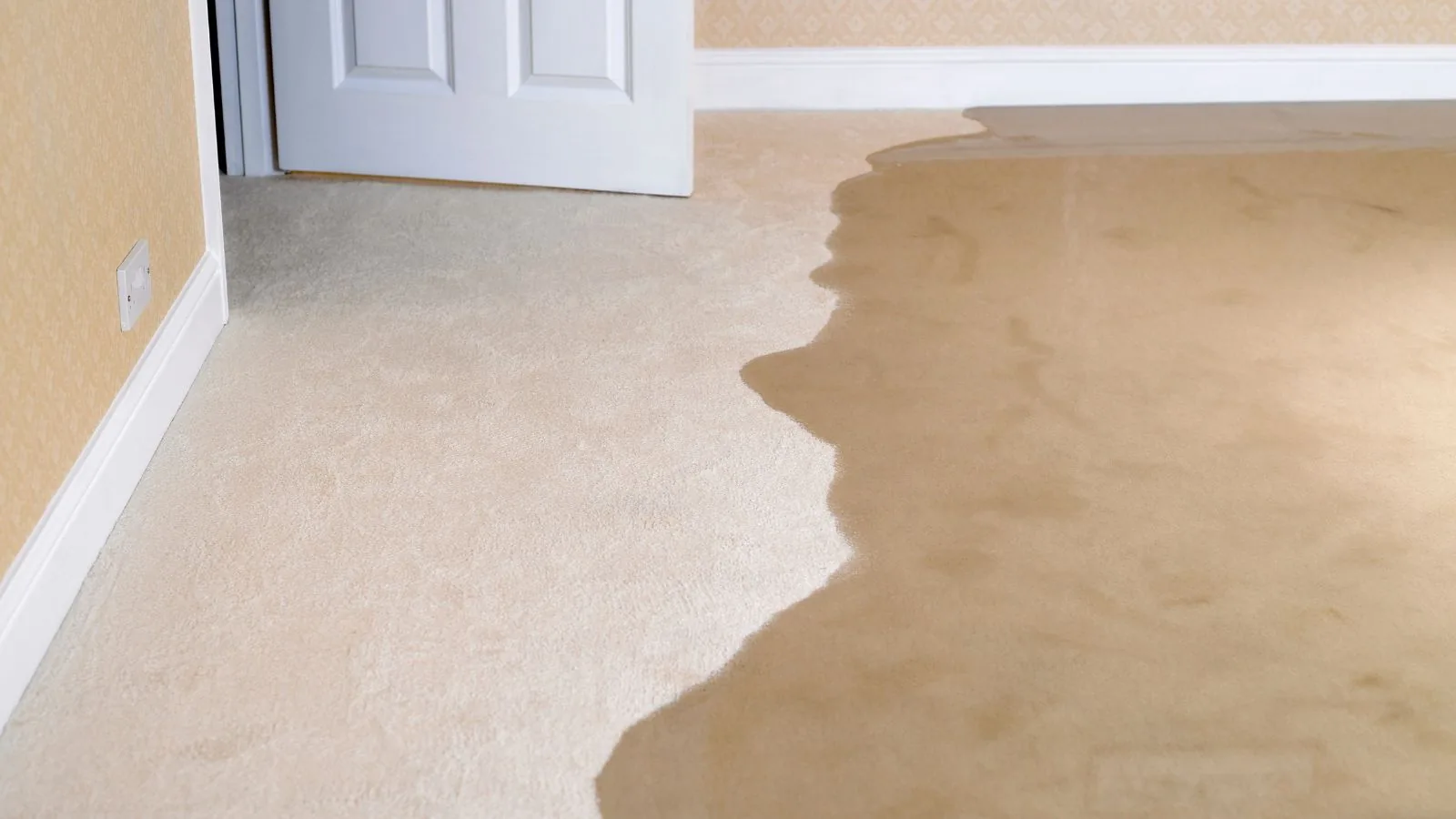
Carpet, pad and the water that soaks them
Carpet water damage is the soaking of carpet fibers, the pad beneath and the subfloor under it. Carpet is a thin top layer. The pad underneath is a sponge that holds most of the water and stays wet long after the surface feels dry.
That pad and the tack strip at the wall edge are why wet carpet is more than a surface problem. Water that sat in the pad moves into the subfloor and the bottom of the wall, so we check those too.
What to do right away with wet carpet
- Stop the water source and move furniture off the wet area. Put foil or plastic under legs if you must leave pieces in place.
- Pick up area rugs and hang them where they can dry.
- Do not walk on wet carpet more than necessary because walking pushes water into the pad.
- Do not use a household vacuum. Use a wet and dry vacuum only on clean water and away from electrical risk.
- Call us promptly because the first day decides whether carpet can be saved.
Dry in place or replace: how the water category decides
The ANSI/IICRC S500 standard guides the decision. Carpet soaked with clean Category 1 water can often be dried in place if it is caught quickly, though the pad is usually replaced. Carpet soaked with Category 2 water, such as washing machine discharge, is generally cleaned or replaced depending on how long it was wet.
Carpet soaked with Category 3 water, such as sewage or flood water, is generally removed and discarded. Marshfield's tidal rivers and storm tides mean flood water is often in that group, so see flood damage cleanup for the full protocol.
How carpet is extracted, lifted and dried
We extract water with a weighted wand that pulls it from the pad. If the pad is saturated or contaminated, we peel back the carpet from the tack strip, remove the pad and dry the subfloor. The carpet is then dried with air movers and set with dehumidifiers, or replaced.
Moisture meters check the carpet backing, the subfloor and the wall base. We re-stretch carpet after drying and clean it. Odor that lingers after drying means moisture is still in the pad or subfloor.
Stairs, wall to wall rooms and area rugs
Carpet on stairs and in bedrooms is usually installed over pad and tack strip, and water travels under it. Area rugs are easier. Hang them to drip and clean them outdoors. A rug with a rubber or jute backing holds water against the floor and should come up first.
If wet carpet shows a color shift on the back, a tea colored stain or a sour smell, tannins and bacteria are involved. Plain drying will not fix that. Cleaning with antimicrobial products may help, and a heavy stain often means replacement.
Subfloor and tack strip checks
After the carpet is lifted, we check the subfloor with a moisture meter. A plywood subfloor usually dries well. Particleboard swells. Tack strip nails rust and wooden strips can hold moisture at the wall edge, so we look there for stains.
Once the subfloor is dry, new pad and re-stretched carpet go back down. See hardwood floor water damage if the room has wood under the carpet.
Basement carpet and claims
Carpet in a basement is more at risk because concrete wicks moisture. See our basement water damage page for below-grade carpet. The Massachusetts Division of Insurance notes that standard homeowners policies do not cover flood, so ask your insurer what applies. Photograph the carpet before it is lifted.
Questions homeowners ask
Can wet carpet be saved?
If the water was clean and the carpet is dried within a day or two, often yes. The pad is usually replaced.
How long does it take carpet to dry?
Surface dryness is not the test. Moisture readings in the pad and subfloor decide it.
Will wet carpet smell bad?
It can if it stays damp. Moisture in the pad or the subfloor causes a musty smell, so drying has to reach the layers below.
Do I need to replace the pad?
Usually yes after a significant soaking. Pad is inexpensive compared to the risk of leaving it wet.
Still have a question about carpet water damage? Call (781) 621-1785 and ask us directly.