

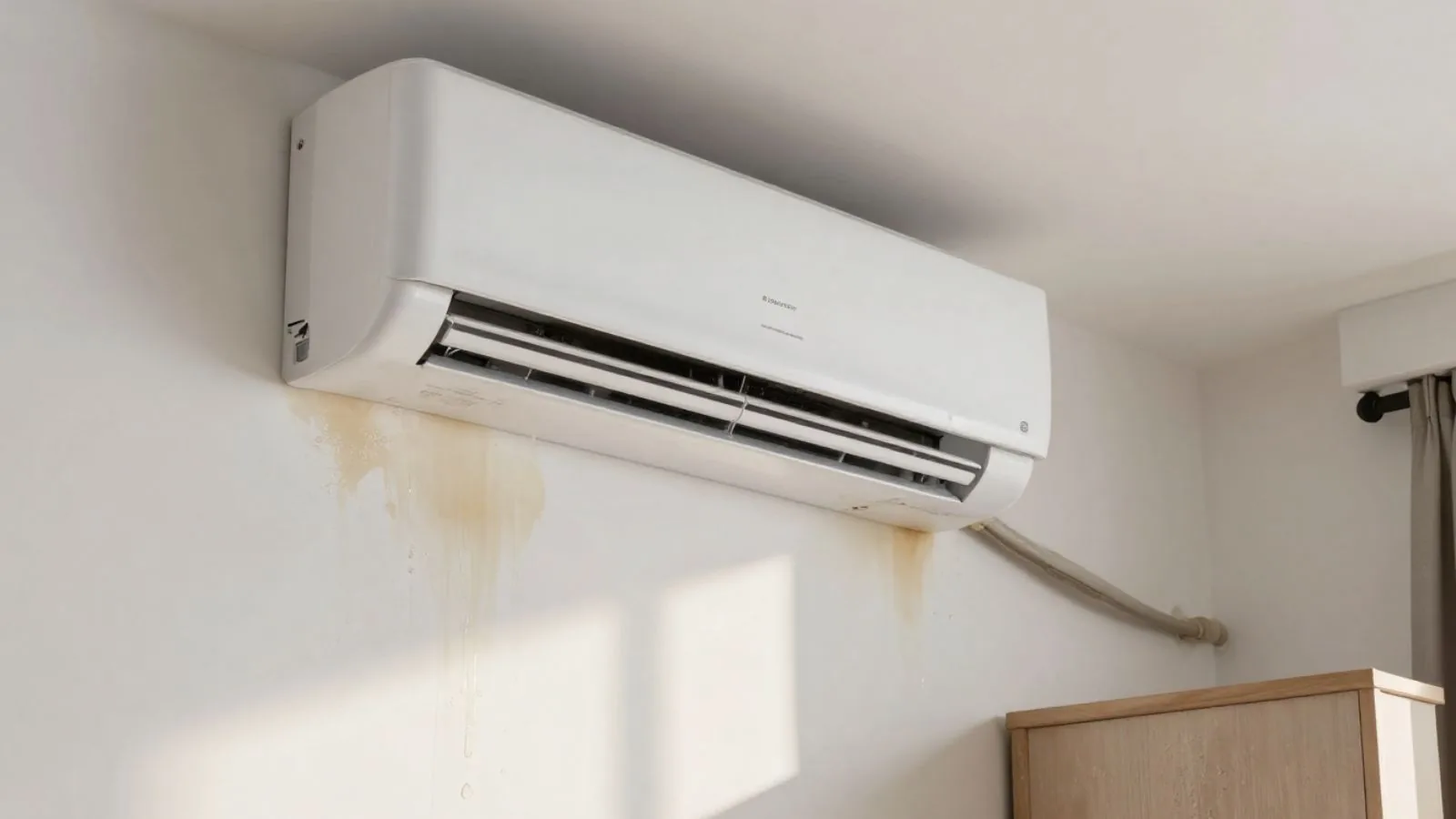
How an air conditioner leaks into a house
AC leak water damage is the staining and wetting of ceilings, walls and floors after a condensate drain line clogs or an evaporator pan overflows. Cooling coils pull moisture from the air, and that water is meant to leave through a drain line. When the line clogs with algae or dust, the pan fills and spills.
Air handlers sit in attics, closets, basements and above ceilings. Ductless wall units mount high on a wall, and a blocked line can run down the wall behind them. The location tells you which materials to inspect.
What to do when you see an AC leak
You can stop the damage by turning off the system. Water cannot form if the unit is not cooling.
- Switch the thermostat off and turn the system off at its breaker.
- Place a bucket under the drip and wipe up standing water.
- Do not touch light fixtures or outlets near a wet ceiling.
- Check the drain line outlet and the pan if you can reach them safely. A visible clog sometimes clears with a wet vacuum on the line end.
- Call an HVAC contractor to clear the line, and call us to dry what got wet.
Why slow leaks cause the worst damage
Most AC leaks are small and long. A few ounces a day soak a ceiling panel or the top of a wall for weeks before a stain forms. By then the insulation and the drywall paper have stayed damp long enough to support mold growth if conditions allow, so drying and a close inspection matter.
A clogged line can also leak while the house is empty. If you are away for a stretch, check the pan and drain line before you leave. The Massachusetts Division of Insurance explains that coverage for non-flood water often turns on whether the damage was sudden and accidental, so a leak that went unnoticed for weeks may be treated differently. Ask your insurer.
Signs an air conditioner is leaking inside your walls
Condensate leaks often start small. Look for a stain on a ceiling below an attic unit, a damp patch near a wall mounted head, a musty smell when the system runs or a pan that never seems to empty. Rust on the pan or on nearby metal is another clue.
A ceiling stain that grows in humid weather and shrinks in dry weather points to condensate. A stain that appears after rain points to the roof. Telling those apart saves money, and our ceiling water damage page covers the roof case.
Stopping the leak before drying starts
Turn the system off at the thermostat if water is dripping. Running a unit with a blocked drain keeps feeding the leak. Do not pour bleach into a line you cannot see. Ask an HVAC technician to clear the drain and check the float switch that shuts the system off when the pan fills.
Once the source is fixed, we dry wet insulation, ceiling drywall and the framing around the air handler. Insulation holds water against wood, so it is usually removed rather than dried in place.
Drying and repair after an AC leak
We use moisture meters and a thermal imaging camera to find the wet area, then remove wet insulation and drywall that stayed saturated. Air movers and dehumidifiers dry the framing, and readings are checked until the materials return to normal. See our ceiling water damage page when the leak came through a ceiling.
If the leak was long running or the area looks dark or smells musty, ask us about mold. Our mold remediation page explains how testing and removal follow the ANSI/IICRC S520 standard.
Questions homeowners ask
Why is my air conditioner leaking water inside the house?
The most common cause is a clogged condensate drain line. Others include a cracked drain pan, a frozen coil that thaws and overflows, or a loose connection.
Can I clear the drain line myself?
Sometimes. A wet and dry vacuum on the outside end of the line can pull out a clog. A technician should handle deeper blockages or any leak inside the unit.
How long does it take to dry a ceiling after an AC leak?
It depends on how much material was wet. Moisture readings tell us when the drywall and framing are dry, not a set number of days.
Does insurance cover AC condensate damage?
Coverage differs by policy. Sudden leaks are more often covered than slow ones. Check your policy and ask your insurer.
Still have a question about ac leak water damage? Call (781) 621-1785 and ask us directly.