

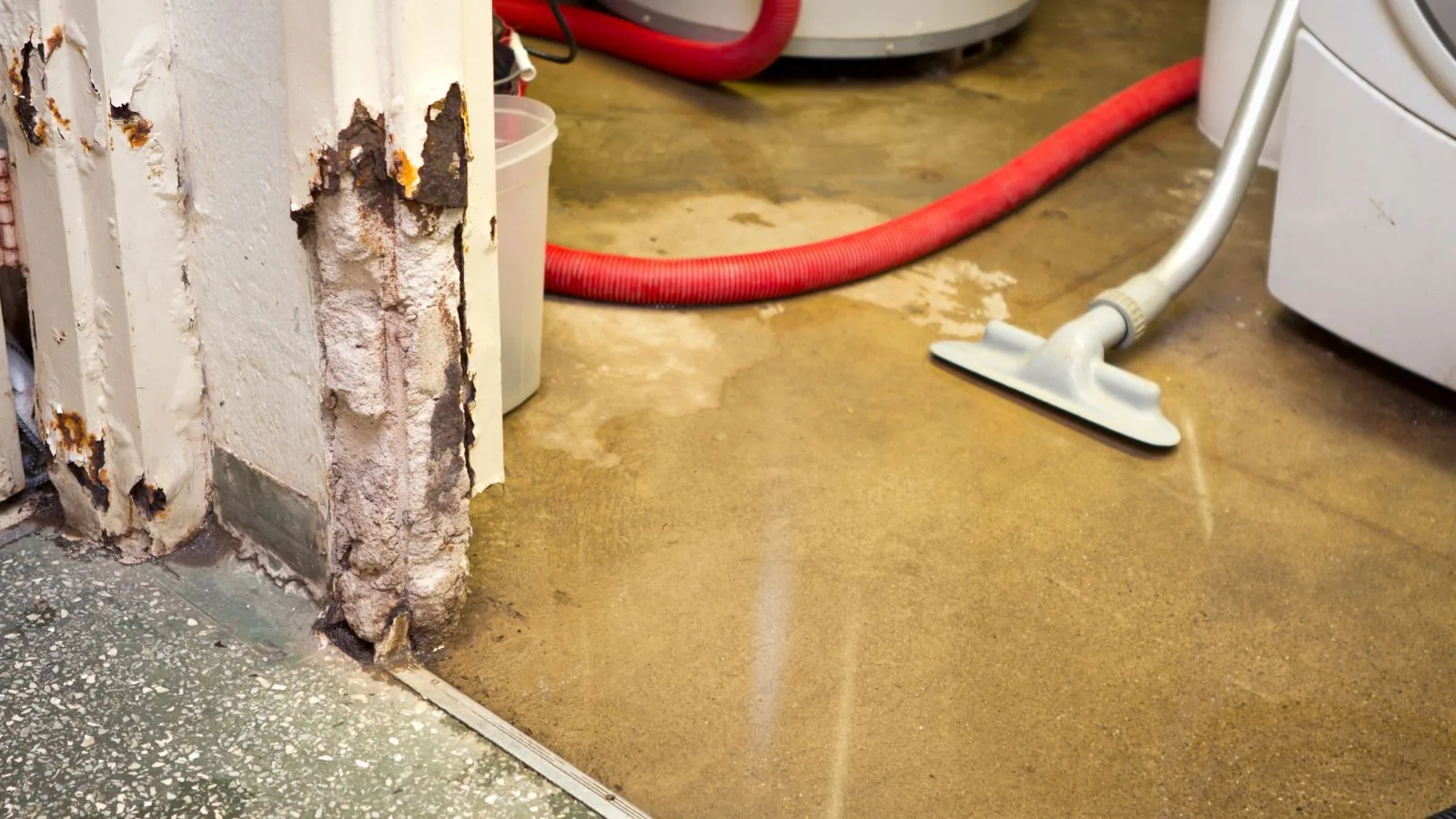
Why water is sorted into categories
The ANSI/IICRC S500 standard sorts water by how contaminated it is at the source. The three categories are clean water, gray water and black water. The category decides what can be dried, what must be cleaned and what must be removed.
It also explains why two floods of the same depth can be handled so differently. A few inches of water from a supply line is a drying job. A few inches of water from a sewer is a removal job. The depth is the same and the work is not.
Category 1: clean water
Category 1 water comes from a sanitary source and poses no substantial risk at the moment it is released. Examples include a broken supply line, a faucet left running, a water heater tank leak and a leaking fridge ice maker line.
Most materials hit by Category 1 water can be dried if the work starts quickly. Carpet may stay, while pad is often replaced. Drywall that was wet briefly may dry in place. The catch is time, since clean water becomes less clean the longer it sits.
Category 2: gray water
Category 2 water has some contamination and can cause illness if people drink or touch it. Examples include dishwasher or washing machine discharge, toilet overflow with urine but no feces and water from a waterbed or an aquarium.
Porous materials such as carpet pad and insulation are usually removed. Carpet may be cleaned and dried if the exposure was short. Hard surfaces are cleaned and disinfected. Category 2 can be upgraded to Category 3 if it sits.
Category 3: black water
Category 3 water is grossly contaminated and can contain pathogens and toxins. Examples include sewage, toilet backflow from beyond the trap, rising flood water from rivers and the ocean and water from standing water that has grown bacteria.
Everything porous that touched it is typically discarded. That means carpet, pad, drywall, insulation and upholstered furniture. Hard materials are cleaned and disinfected. Crews wear protective gear, and you should not handle it yourself.
Why Marshfield flood water is Category 3
Marshfield's tidal rivers, marshes and low coastal streets mean storm flooding is a regular concern. The town's draft Multi-Hazard Mitigation Plan reports that the Brant Rock Esplanade floods two to three times a year, and the 2018 storm produced more than three feet of standing water in places.
Tidal water mixes ocean water, street runoff, oil and sometimes sewage. It is treated as Category 3 from the start. See flood damage restoration for the cleanup steps and sewage backup cleanup when the source is waste water.
Categories can change over time
Water gets worse as it ages. Clean water that sits for two or three days in warm conditions can grow bacteria and move into Category 2. Gray water that sits longer can become Category 3. That is why fast action is more than a convenience.
It is also why a crew asks when the leak began. The answer changes the category, and the category changes the plan.
The four classes of water damage
Separate from the category, the S500 standard also rates how much of a building is wet. Class 1 is a small area with low absorption. Class 2 covers a whole room with wet carpet and wall wicking. Class 3 means water came from above and soaked ceilings, walls and floors. Class 4 covers deep saturation in dense materials like hardwood and concrete.
Category tells you what is in the water. Class tells you how hard it will be to dry. A job has both.
What you can do before the crew arrives
- Stop the source and note the time.
- Look at the water. Is it clear, cloudy or foul smelling?
- Keep people and pets out of anything that might be Category 2 or 3.
- Photograph the water, the source and the damage.
- Do not run fans or vacuums in a room with black water.
Tell the dispatcher what you see. It helps us bring the right gear.
How a crew samples and decides on site
A crew looks at the source, asks how long the water has been there and checks color, smell and what the water crossed. If the water passed through a dirty area or sat in a warm room, the category may be raised. When there is doubt, crews treat the water as the more contaminated category.
The result shapes what protective gear is used, what is removed and how the area is cleaned afterward.
Why you should not guess
It is tempting to say the water is clean because it looks clear. Clear water can still carry bacteria, and cloudy water is not always dangerous. Color is a poor guide. The source and the time matter more.
When you call, describe where the water came from and how long it has been there. Do not worry about getting the category right. That is our job.
Examples from Marshfield homes
A frozen pipe that splits in a closet sends Category 1 water at first. A washing machine hose that fails in a basement sends Category 1 or 2 depending on what the machine was doing. A nor'easter that pushes the tide into a first floor brings Category 3 water. A crew sorts them out in minutes, and the plan follows.
Telling us the source on the phone lets us bring the right gear the first time.
Words you may hear from a crew
Crews may say clean, gray or black water, or they may refer to category numbers. They may mention wicking, the way porous materials pull water upward, and evaporation load, the amount of moisture the air has to absorb. Ask them to explain any term you do not know.
Categories in North Pembroke and Greenbush
A groundwater seep in a North Pembroke basement and a washing machine overflow in a Greenbush home are very different calls, even if the wet footprint looks the same. Each town page has details on local water and permits.
Visit our homepage to see everything we offer.
Questions homeowners ask
Is rainwater Category 1?
Rain falling in a clean place can be, but rain that runs across a roof, a yard or a street picks up contamination and is usually treated as Category 2 or 3.
Can Category 3 water damage be cleaned by a homeowner?
Not safely. It needs protective gear, disinfection and removal of porous materials.
Can drywall be saved after Category 2 water?
Sometimes if the exposure was brief, but it depends on the material and time. Many cases lead to removal.
Who decides the category?
The restoration professional decides after looking at the source, the time and the materials, following the S500 standard as a reference.
Still have a question about water damage categories 1, 2 and 3? Call (781) 621-1785 and ask us directly.