

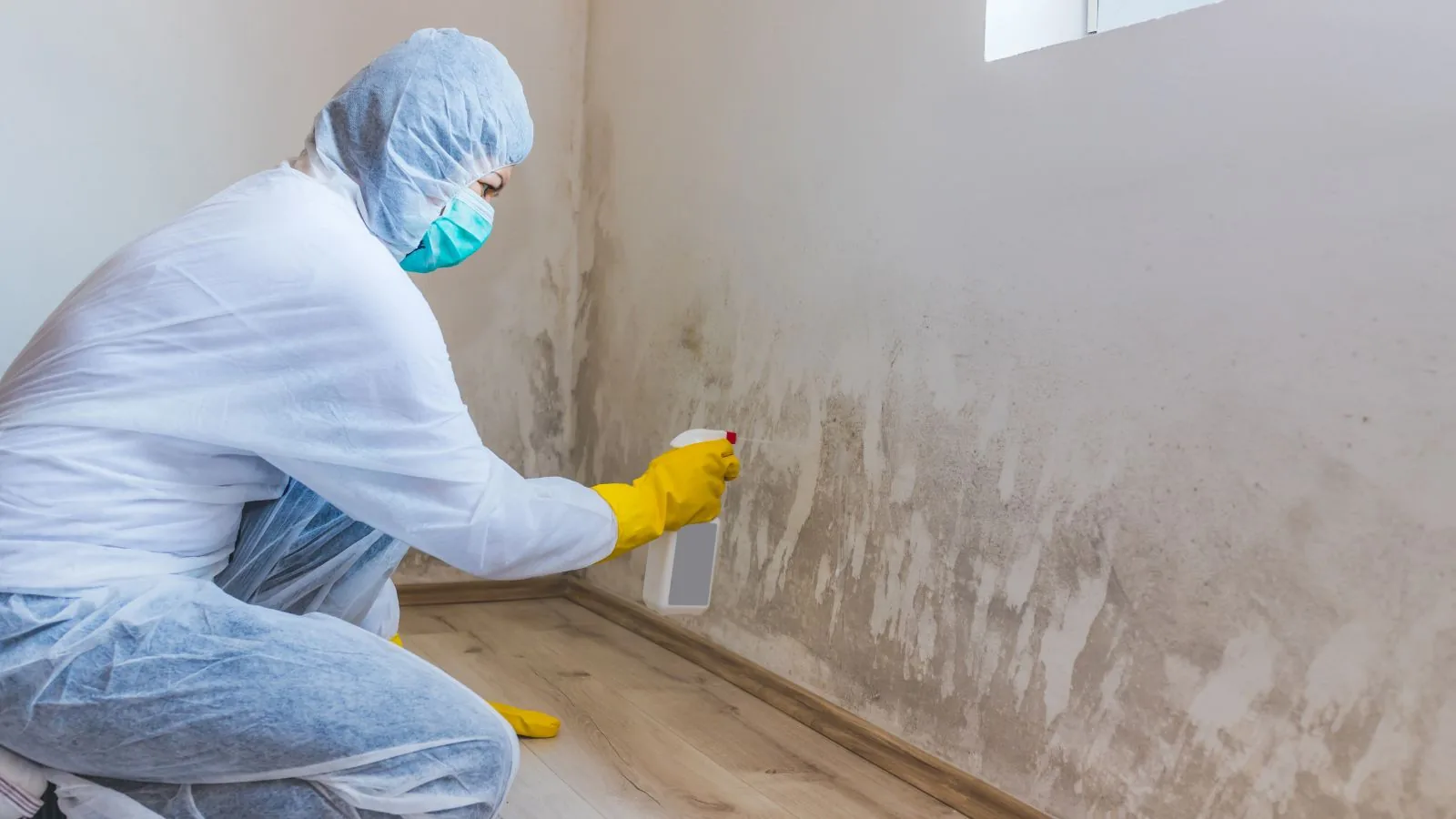
Start by sizing up the patch
Before you clean anything, look at the problem the way an inspector would. How big is the patch, what is the wall made of and how long has the area been damp? Those three answers tell you whether this is a homeowner job.
The EPA suggests that mold covering less than about ten square feet, roughly a three foot by three foot patch, is generally something a homeowner can handle. Larger areas, repeated growth or health concerns call for a professional. That is a guideline, not a law, so use judgment.
The quick checklist: DIY or call
| Question | If yes |
|---|---|
| Is the patch smaller than about ten square feet? | May be a homeowner job on a hard surface |
| Is the wall painted drywall that was soaked? | Likely mold inside, call a professional |
| Did sewage or flood water cause it? | Call a professional, do not clean it yourself |
| Does anyone in the home have breathing problems? | Stay out and call a professional |
| Does it come back after cleaning? | There is a moisture source, find it first |
| Is it near an HVAC vent or return? | Call a professional, spores can spread through ducts |
Find the moisture before you clean
Mold needs water. If you scrub off the growth and the wall stays damp, it will be back in weeks. Look for a leaky pipe, a roof or window leak, a dripping air conditioner line, a clogged gutter or condensation on a cold wall.
A cheap moisture meter helps. Press it against the wall and compare the reading with a dry wall nearby. Fix the source first. If you cannot find it, that is a reason to call us for a moisture map, because wet walls are rarely visible.
What homeowners can safely clean
On a hard, non-porous surface such as tile, glass, sealed countertops or glazed surfaces, a small amount of surface mold can be wiped with a detergent and water solution. Wear gloves, eye protection and a well fitted N95 respirator. Open a window if the weather allows, and keep children and pets away.
Wipe with a damp cloth and avoid dry scrubbing, which puts spores into the air. Bag the cloth and throw it away. Dry the surface fully. If the surface is painted drywall, do not scrub. Paint and paper hide how far the growth goes.
Why bleach is not the answer on porous walls
Many people reach for bleach. On porous materials such as drywall and wood, the water in the bleach soaks in while the chlorine tends to stay on the surface. That can feed the roots. Bleach also has fumes, and it can react with ammonia and other cleaners to release harmful gas.
The EPA does not recommend routine biocide use for mold cleanup, since the real fix is removing growth and drying the material. Detergent and water, plus drying, is the guidance for non-porous surfaces. For porous ones, removal is the answer.
Signs that you should stop and call
- The patch is larger than a few square feet, or there are several patches.
- Drywall is soft, swollen, stained or bowed.
- The musty smell is strong and you cannot find the visible source.
- Mold appears after a flood, a sewer backup or a long leak.
- You or someone in the home reacts to the air, or has asthma or a weakened immune system.
- The growth returns after cleaning.
If any of those apply, step away, close the door and call. Our mold remediation page explains what a professional job involves.
If you decide to clean a small patch
- Fix the water source and confirm the surface is dry.
- Put on gloves, goggles and an N95 respirator.
- Close the room off from the rest of the house and turn off any fans.
- Wipe the hard surface with a damp cloth and detergent solution. Work gently.
- Bag the cloth and wash your hands and clothing.
- Dry the area and check it again after a week with a flashlight.
Drying is part of the cleanup
A cleaned wall that stays damp is still a risk. Run a dehumidifier in the room and keep humidity under about fifty percent. In basements and crawl spaces, ventilation and drainage matter. Our structural drying page explains how we measure and dry.
Check the area again a week or two later. If mold returns, there is moisture you have not found yet.
Protecting yourself while you work
Mold work stirs up spores, so protection matters even for a small patch. An N95 respirator that fits snugly is the minimum, along with gloves that go past the wrist and goggles without vent holes. Wear clothes you can wash right away, and shower afterward.
Keep the work area closed off, and do not carry the cloth through the house. Skip the project if you feel short of breath or get irritated eyes and throat. That is a signal to step back and let a professional take over.
What a professional adds
A professional brings moisture meters, a thermal camera, containment and HEPA filtration. More important, they bring a way to find the extent of growth without guessing. They can open a wall in a controlled way, check the framing and say what is dry.
If you only need an opinion, call and describe what you see. We will tell you whether it sounds like a homeowner task or a job for a crew.
Keeping mold from returning
Once a wall is clean and dry, keep it that way. Hold indoor humidity down, vent bathrooms and kitchens, repair leaks quickly and watch cold corners in winter. A quick monthly look with a flashlight is enough to catch regrowth early.
Coastal homes in Humarock and Norwell
Salt air, fog and tidal humidity keep walls damp in beach houses, such as those in Humarock. Larger houses with bathrooms far from exhaust vents, as seen in parts of Norwell, often develop mold near showers and on exterior corners.
Run exhaust fans during and after showers, and check the corners of closets on outside walls. The homepage lists the rest of our services if you need more than a mold look.
Questions homeowners ask
Can I kill mold with vinegar?
Vinegar may reduce some surface growth but does not reach porous materials or fix moisture. Removal and drying matter more.
Will painting over mold stop it?
No. It tends to bleed through and keeps growing if moisture remains.
Is the black stuff in my shower grout dangerous?
Small amounts on hard surfaces can usually be cleaned with detergent and water. Keep the area dry and ventilated.
When should I call a professional?
Call for larger areas, soaked drywall, flood or sewage water, recurring growth or health concerns.
Still have a question about how to rid mold on walls? Call (781) 621-1785 and ask us directly.